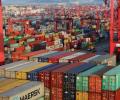
Shipments from Russia rose nearly 33 per cent to $1.1 billion in March from $831.17 million in the previous month, which was when the country mounted aggression on Ukraine and faced sanctions from Western nations, the data accessed by Business Standard shows. Growth in imports was largely on account of oil, people aware of the matter said. The Department of Commerce is learnt to have written to the Ministry of Petroleum and Natural Gas (MoPNG), seeking details of imports, including the payment mechanism, which India has not made public.

Gold imports, which have a bearing on the current account deficit, declined 47.42 per cent to $9.28 billion during April-October due to fall in demand in the wake of the COVID-19 pandemic, according to data from the commerce ministry. Imports of the yellow metal stood at $17.64 billion in the corresponding period of 2019-20. The imports, however, recorded a growth of about 36 per cent in October.
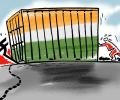
India's merchandise exports jumped 27.16 per cent to $30.04 billion in November on the back of good performance by sectors like petroleum products, engineering goods and electronic items, official data showed on Tuesday. The exports stood at $23.62 billion in November 2020. Imports in November were at $52.94 billion, showing an increase of 56.58 per cent over inbound shipments of $33.81 billion in the year-ago month.

Snapping the two-month easing trend, WPI inflation rose in August and remained in double-digit for the fifth consecutive month. In July 2021, WPI inflation stood at 11.16 per cent. In August 2020, WPI inflation was at 0.41 per cent. "The high rate of inflation in August 2021 is primarily due to rise in prices of non-food articles, mineral oils; crude petroleum and natural gas; manufactured products like basic metals; food products; textiles; chemicals and chemical products etc as compared the corresponding month of the previous year," the commerce and industry ministry said in a statement.

'Nirmalaji's Budget announcements have long-term implications and are not backed by enough money when the short-term outlook looks bleak,' notes T N C Rajagopalan.

The new mantra was to align Apple's ambition with the government's, focusing on Modi's favourite themes of Make in India, employment generation and India as a high-tech export hub.

The stimulus package announced by the government for the revival of the pandemic-hit economy has been found to be "inadequate", according to a Parliamentary panel report. The report of the department-related Parliamentary Standing Committee on Industry on the impact of COVID-19 pandemic on micro, small and medium enterprises (MSME) sector has noted that in the process of economic recovery post-first wave of the pandemic, the second wave has even more vigorously ripped the economy particularly the MSME sector. "The committee observes that the stimulus package announced by the government for the economic revival from the pandemic hit economy has been found to be inadequate as the measures adopted were more of loan offering and long-term measures instead of improving the cash flow to generate demand as immediate relief," it said.
India's exports in January rose 25.28 per cent to $34.50 billion on account of healthy performance by mainly engineering, petroleum and gems and jewellery sectors, even as trade deficit widened to 17.43 billion, according to data released by the commerce ministry on Tuesday. Imports grew by 23.54 per cent to $51.93 billion during the month under review. Trade deficit, difference between imports and exports, stood at $14.50 bn in January 2021.

Automobile dealers' body FADA has urged the government to formulate a task force to monitor the compensation structure being worked out by Ford India for its dealer partners across the country. In a letter to Heavy Industries Minister Mahendra Nath Pandey, FADA president Vinkesh Gulati also requested the government to instruct Ford India to keep the industry body in the loop regarding the compensation structure for the dealerships. "We humbly request your Ministry's intervention... Create a task force which takes day-to-day updates from Ford India to monitor the compensation plan for automobile dealers and dealership employees," Gulati said in the letter.

"In principle, the ask in return is that India should not support the G7 (Group of Seven) proposal. "A decision on this issue will be taken later following talks with all the partners," an official with the Ministry of External Affairs (MEA) said.These "substantial discounts" will be steeper than those offered by Iraq in the past two months, officials said.
The output of eight core sectors jumped by 56.1 per cent in April mainly due to a low base effect and uptick in production of natural gas, refinery products, steel, cement and electricity, official data released on Monday showed. The eight infrastructure sectors of coal, crude oil, natural gas, refinery products, fertilisers, steel, cement and electricity had contracted by 37.9 per cent in April 2020 due to lockdown restrictions imposed to control the spread of coronavirus infection. In March this year, the eight sectors had recorded a growth rate of 11.4 per cent.

Foreign direct investment into India increased by 60 per cent to $4.44 billion in April as against $2.77 billion in the same month last year, government data showed on Wednesday. Total FDI, including equity, re-invested earnings and capital, rose 38 per cent to $6.24 billion in April this year, as against $4.53 billion in April 2020, as per the data. "During April, 2021 FDI equity inflows amounting to $4.44 billion were reported in the country which is an increase of 60 per cent over the FDI equity inflow of April, 2020 ($2.77 billion)," the commerce and industry ministry said in a statement.

References to the repealed laws for service tax, purchase tax, etc, continue in the SEZ laws.
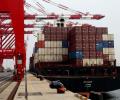
On the back of rising crude oil purchases, India's bill for imports from sanctions-hit Russia jumped 3.5 times in a year in April to $2.3 billion, showed data from the commerce ministry. In April, India's crude oil imports from Russia were valued at $1.3 billion, 57 per cent of India's total inbound shipments from Russia. Other major imported items during the month included coal, soybean and sunflower oil, fertilisers, and non-industrial diamonds. That month, Russia was also the fourth-largest crude petroleum supplier to India, after Iraq, Saudi Arabia, and the United Arab Emirates (UAE).

The output of eight core sectors grew by 16.8 per cent in May, mainly due to a low base effect and uptick in production of natural gas, refinery products, steel, cement and electricity, official data released on Wednesday showed. The eight infrastructure sectors of coal, crude oil, natural gas, refinery products, fertilisers, steel, cement and electricity had contracted by 21.4 per cent in May 2020 due to the lockdown restrictions imposed to control the spread of the COVID-19 infections. In March this year, these key sectors had recorded a growth of 11.4 per cent, and 60.9 per cent in April.

'I just want to keep on working till they have to shoot me down.'
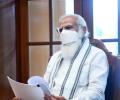
PM also said that states must act against any hoarding of oxygen and directed officials to ensure that the oxygen supply to various states happens in a smooth, unhindered manner and called for fixing responsibility with the local administration in cases of obstruction.

The apex body for liquor firms Confederation of Indian Alcoholic Beverage Companies has urged the government to gradually reduce customs duties on British alcoholic beverages under the proposed India-UK free trade agreement to support domestic players. India and the UK have formally launched negotiations for an FTA, under which duties would be reduced or eliminated on several goods traded between the two countries. The Confederation of Indian Alcoholic Beverage Companies (CIABC) has also suggested the government to ensure that the UK allows the selling of domestic whiskies as 'Indian Whisky', irrespective of whether they are made from malt, grain spirits or molasses-based spirits.
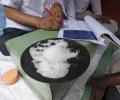
Pakistan will buy sugar and cotton from India, newly appointed Finance Minister Hammad Azhar announced on Wednesday, lifting a ban on their import from the neighbouring country imposed in the wake of heightened tension over Kashmir in 2019. The decision was taken at the meeting of the economic coordination committee (ECC), which was chaired by Finance Minister Azhar.

The production of eight infrastructure sectors rose by 7.5 per cent in October on healthy performance by the segments of coal, natural gas, refinery products and cement, official data released on Tuesday showed. The output of eight core sectors of coal, crude oil, natural gas, refinery products, fertilisers, steel, cement and electricity had contracted by 0.5 per cent in October 2020, according to the data released by the commerce and industry ministry. Core sectors' growth stood at 4.5 per cent in September this year.

Violation of the provisions entails a punishment of a jail term of up to five years or with fine up to Rs one crore or with both.

Even as the bilateral relationship between the two neighbouring countries remains hostile, there is growing coordination between India and Pakistan on one multilateral forum - the World Trade Organization (WTO). Both countries have made two joint submissions at the WTO as co-sponsors in the past two months. In June, Pakistan joined India, Cuba, and 44 African countries, seeking sufficient flexibility in intellectual property rights for developing countries to fight the Covid-19 pandemic.

In the national capital, onion prices were ruling at around Rs 40 per kilogram.

FDI equity inflows into the country during April-January 2020-21 grew by 28 per cent to $54.18 billion, according to the Commerce and Industry Ministry data released on Monday. Foreign direct investment (FDI) inflows during April-January 2019-20 stood at $42.34 billion. Total FDI (which includes reinvested earnings) during the 10-month period in FY21 increased by 15 per cent to $72.12 billion over the year-ago period.

The wholesale price-based inflation spiked to 12.54 per cent in October, mainly due to rise in prices of manufactured products and crude petroleum. WPI inflation has remained in double digit for the seventh consecutive month beginning April. Inflation in September this year was at 10.66 per cent, while in October 2020 it was at 1.31 per cent.

Alka Mittal has been appointed interim chairman and managing director of Oil and Natural Gas Corporation (ONGC) - the first woman to head the country's largest oil and gas producer. Mittal replaces Subhash Kumar, another interim head who retired after reaching superannuation age on December 31. "The Appointments Committee of the Cabinet (ACC) has approved the proposal of the Ministry of Petroleum and Natural Gas for entrustment of additional charge of the post of chairman and managing director (CMD), ONGC to Alka Mittal, director (HR), ONGC for a period of six months with effect from January 1, 2022, or till the appointment of a regular incumbent to the post, or until further order, whichever is the earliest," the Department of Personnel and Training (DoPT) said in an order dated January 3, 2022.

CAIT had last month also filed a petition in National Company Law Appellate Tribunal (NCLAT) against the Competition Commission of India's decision to approve the deal.

The wholesale price-based inflation eased marginally to 12.07 per cent in June as crude oil and food items witnessed some softening in prices. However, WPI inflation remained in double digit for the third consecutive month in June, mainly due to a low base of last year. WPI inflation was (-) 1.81 per cent, in June 2020. Snapping the five straight months of uptick, the wholesale price index (WPI)-based inflation in June softened as prices of food articles and crude oil eased, even though manufactured products hardened.

According to the commerce and industry ministry data, during April-February 2018-19, the eight sectors recorded a flat growth rate of 4.3 per cent over the same period previous fiscal.

Gold imports, which have a bearing on the current account deficit (CAD), plunged 57 per cent to USD 6.8 billion (around Rs 50,658 crore) during the first half of this fiscal amid a slump in demand due to the Covid-19 pandemic, showed data by the commerce ministry.

Every twist and turn in KMC's civil service career is attributed to serendipity, an aptitude for making desirable discoveries by accident. He plays down his capabilities, which took him to the top of the civil service as the Cabinet Secretary or his misfortune in losing a daughter in her prime and suggests that his career was indeed serendipitous, observes Ambassador T P Sreenivasan.

According to a commerce and industry ministry statement, the growth rate for these eight key sectors for April 2019 has been revised upward to 6.3 per cent from 2.6 per cent reported earlier mainly due to upward revisions in production of coal, crude oil, steel, cement and electricity.

This will boost availability of these items as well as make them cheaper, it said, adding that Modi also directed the revenue department to ensure seamless and quick custom clearance of such equipment.

made it clear that shops in market places, multi-brand and single brand malls located in municipality areas shall continue to remain closed till May 3.

States and Union Territories have been given the powers for delineation of Red, Green and Orange Zones as per COVID-19 situation, the MHA said. All shops, except those in containment zones and malls, will be allowed to open from Monday with staggered timings during lockdown 4.0, it said.

The output of eight core infrastructure sectors grew marginally by 0.1 per cent in January, mainly due to growth in the production of fertiliser, steel and electricity. The core sectors had expanded by 2.2 per cent in January 2020, according to the provisional data released by the commerce and industry ministry on Friday. Coal, crude oil, natural gas, refinery products, and cement recorded negative growth in January.

India must have a "contingency plan" in place to ring-fence the country's economy if the political showdown in the US leads to a default on its international monetary obligations, industry body Assocham said.

However, the countries did not take up the issue of proposed withdrawal of export incentives by the US to Indian exporters under Generalized System of Preference.

Sitharaman, who was holding the Commerce portfolio (Independent charge), was on Sunday promoted to the Cabinet rank as was Goyal.

Having almost closed the last contours of the limited trade deal and with the announcement of a much larger trade deal in the offing, we have moved to a new level of engagement: Goyal.
